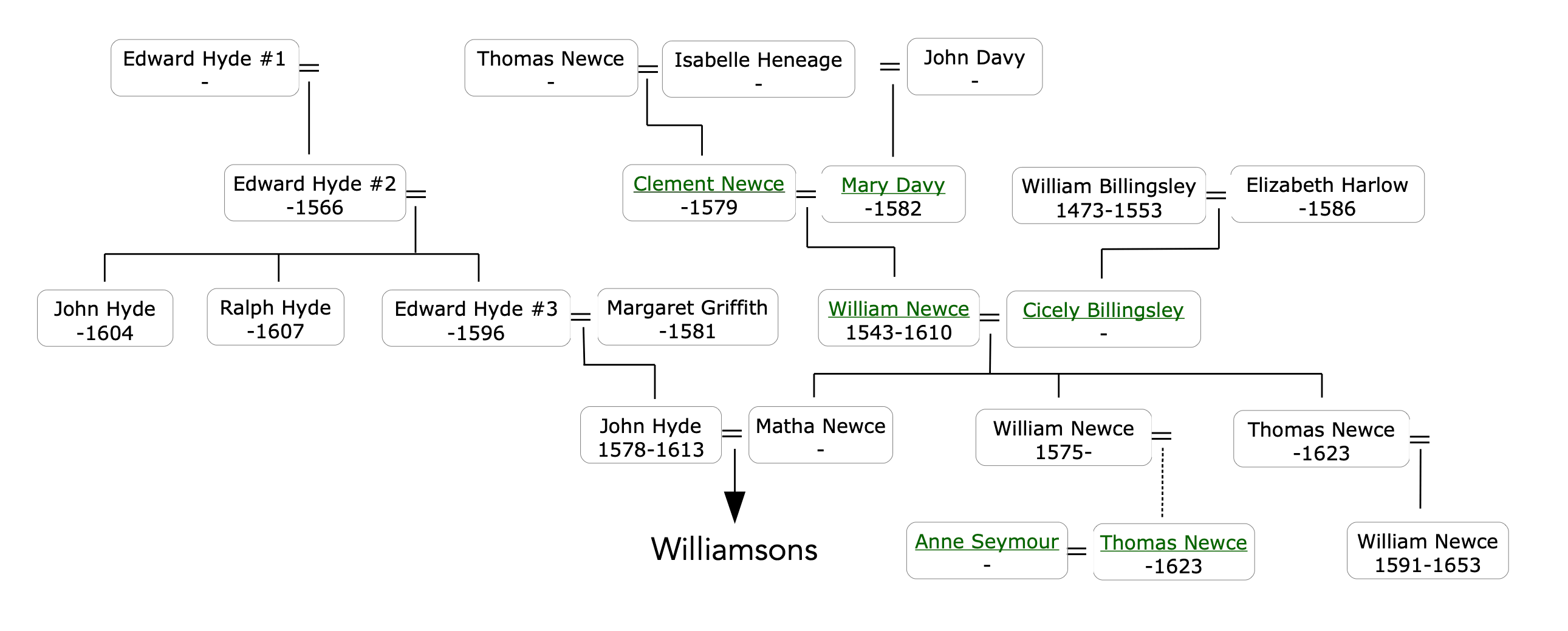
The Hydes
The Hyde’s were a family of country gentry from eastern Cheshire whose main seats included Hyde Hall in Hyde, Hyde Hall in Denton, and Norbury, near Stockport- all within a few miles of each other in what is now southeast suburban Manchester. Most were only middling gentry, though the Norbury branch became prominent in the 17th century thanks to Edward Hyde, First Earl of Clarendon, who was the chief advisor of Charles I during the 1640’s, and later Lord Chancellor to Charles II. Edward’s daughter Ann became the wife of James II and mother of Queens Ann and Mary.
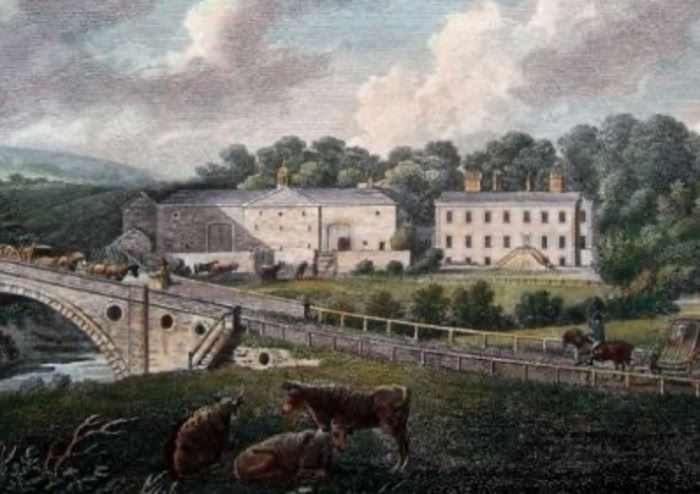
Hyde Hall in Hyde
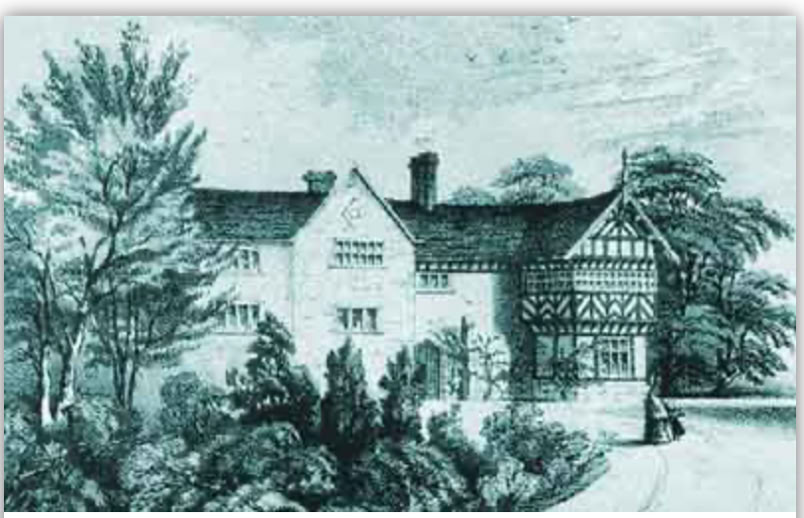
Hyde Hall in Denton
Sometime in the fifteenth century, one branch of the family (probably a younger son of one of the Cheshire branches of the family) moved about seven miles east to the Peak District in Derbyshire,
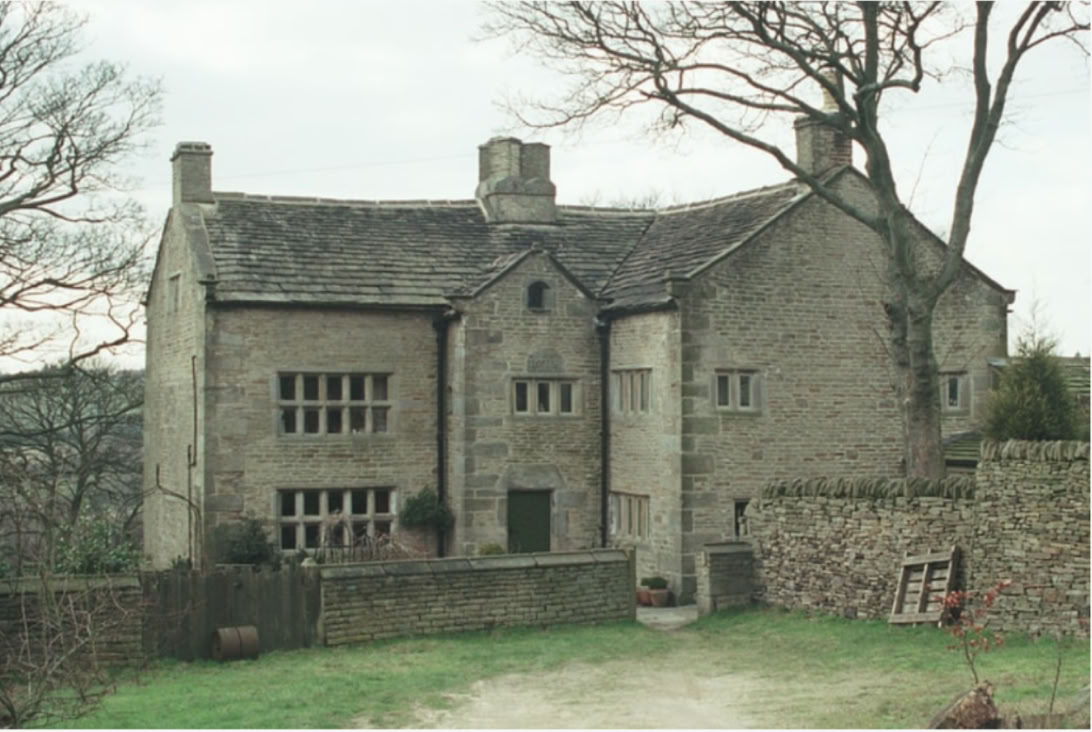
and settled near the town of Hayfield, where they have remained ever since. Their seat was Long Lee Hall, about 2 miles NW of Hayfield. The original hall was rebuilt In the mid-seventeenth century by a later Hyde, and this building, now known as Long Lee Farm, still stands. Somewhat later, one of the Derbyshire Hydes- perhaps Edward #1- apparently left Long Lee and settled in the vicinity of Much Haddam, in Hertfordshire.
Long Lee, near Hayfield
In the early to mid-sixteenth century, Edward’s son- Edward #2- moved to the area of (then suburban) London called The Minories, just outside Aldgate (the easternmost gate in the London city walls). One of his sons, Ralph, returrned to the family lands near Hayfield, but the other two sons, Edward #3 and his brother John, stayed in London, and both became wealthy merchants. John, a merchant tailor, stayed in the Minories, but Edward, a mercer (dealer in fabrics), moved to Abchurch Lane, just south of the present location of the Bank of England. Both John and Edward

London in the 1560’s
had extensive property in London and its suburbs, as well as multiple properties in and near Much Haddam, where many of their kinsfolk still lived. In his will, John left funds to operate a school in Hayfield, which lasted at least into the nineteenth century. One of Edwards’s properties was the Manor of Wakeley in Hertfordshire, which he left to his son, John, who left it to his only surviving child Mary, who became the wife of Samuel Bridger.
Details
A careful and exhaustive survey of the Hertfordshire/London Hyde family is contained in a 2006 article in the Genealogist (20:131). That article points out that the supposed descent of Edward #1 from the Norbury Hydes, as claimed in the Visitation of Hertfordshire, is implausible because of inconsistent dates. That Edward #1 is, in fact, descended from the Derbyshire Hydes is demonstrated by two references in the will of John Hyde, brother of Edward #3- the reference to his brother Ralph, living in Bullshaw, adjacent to Long Lee, and the bequest to start a school in Hayfield. That the Hydes had been long resident in the vicinity of Hayfield is proved by earlier records (see e.g. http://www.stevelewis.me.uk/page70.php).
Virtually nothing, except his 1566 burial at Holy Trinity, The Minories, is known about Edward #2. The wills of Edward #3 and his brother John contain extensive bequests to friends, family, and charitable organizations. Included in Edward’s bequests is that of the Manor of Wakeley in Hertfordshire, whose chain of ownership proves that Edward’s granddaughter Mary was the wife of Samuel Bridger. The only personal fact to emerge from either will is that Edward’s closest friend was Sir. Edward Coke. Coke was a very big deal: Attorney General of England and a very inportant legal scholar- it was he who made the observation that an Englishman’s home is his castle.