Willliam Newce
and
Cicely Billingsley
Born: London England (?)
Died: 22 Feb 1610, Much Hadham, Hertfordshire
Buried: St Andrew’s Church, Much Hadham
Born: London, England (?)
Died:
Buried:
Married: 27 Apr 1562, London, St Mary Woolnoth
Children: William, Thomas, Clement, Henry, Martha (Hyde), Mary (Aylmer), Joan, and two additional sons and four daughters
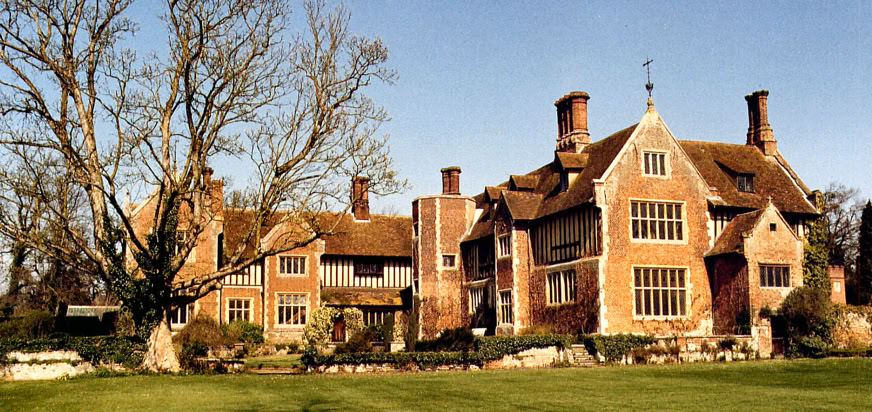
William was probably born in London; he may have been a London merchant for at least part of his life, and left houses in London at his death. However, he clearly divided much of his time between Much Hadham Hertfordshire, and Bristol. One of his principal homes was Barwick Manor, a few miles west of Much Hadham. In 1595, he was collecting taxes in Hertfordshire, being described as “a very honest man and of good ability, having lands to the yearly value at least of 400 pounds”, and he is later buried in Much Hadham. However, in 1579 he acquired a one hundred year lease on the Manor of Clifton, now part of Bristol, from his Barwick neighbor, Sir Ralph Sadler, and he is sometimes referred to as “William Newce of Bristol.” William and Robert Kitchen, a Bristol merchant and Alderman, had for some time the lucrative monopoly on
collecting customs duty on Spanish and French wine imported through Bristol and a few other ports. Another Bristol connection was his second wife, Bridget Cutte, daughter of John Cutte, Mayor of Bristol.
Cecily’s father died when she was young, and her mother remarried the immensely wealth London goldsmith, Sir Martin Bowes. When she and William married in 1562, her mother and stepfather put on an elaborate wedding for the pair, which included bringing in the children’s choir from St Paul’s Cathedral to supplement the church choir. Cecily’s brother, Henry, became a London merchant, Mayor, and custom’s
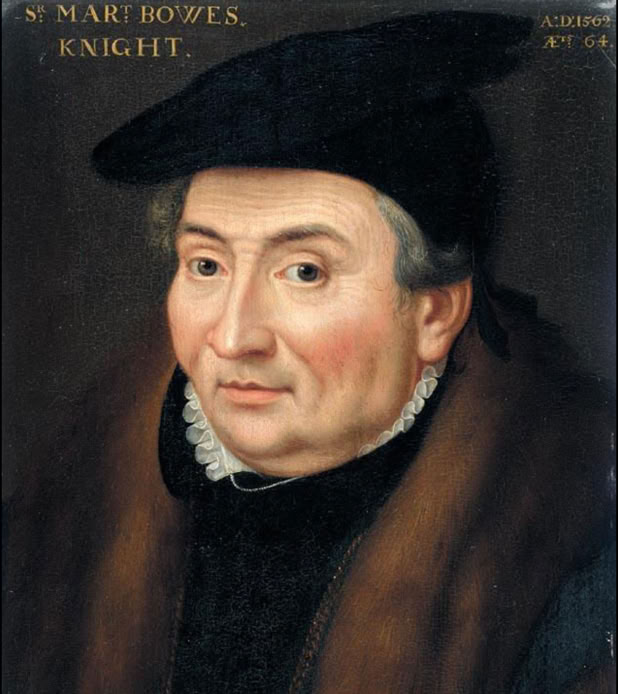
Sir Martin Bowes
collector (like his brother-in-law William Newce), but is most remembered today for producing the first- and for several centuries the only- translation of Euclid’s Elements from Greek to English.
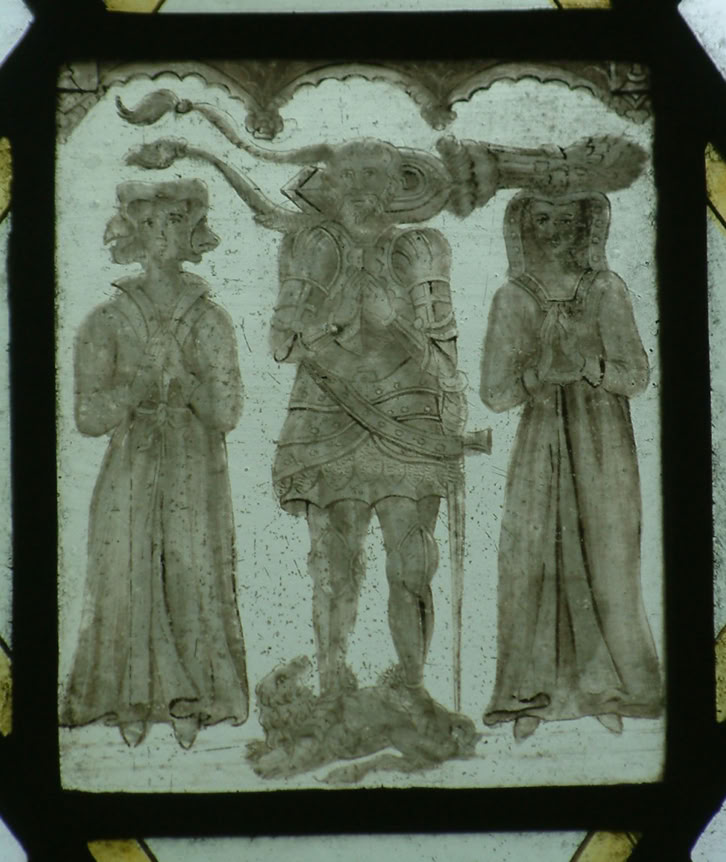
When William died in 1610, he left most of his property to his (presumably) oldest son, Thomas, but left the Manor of Clifton in the possession of his son William. At some time in the early 1600’s, Thomas apparently acquired the Manor of Rainthorpe in Norfolk, where he installed a stained glass window showing his father with his two wives.
William and his two wives
Rainthorpe Manor
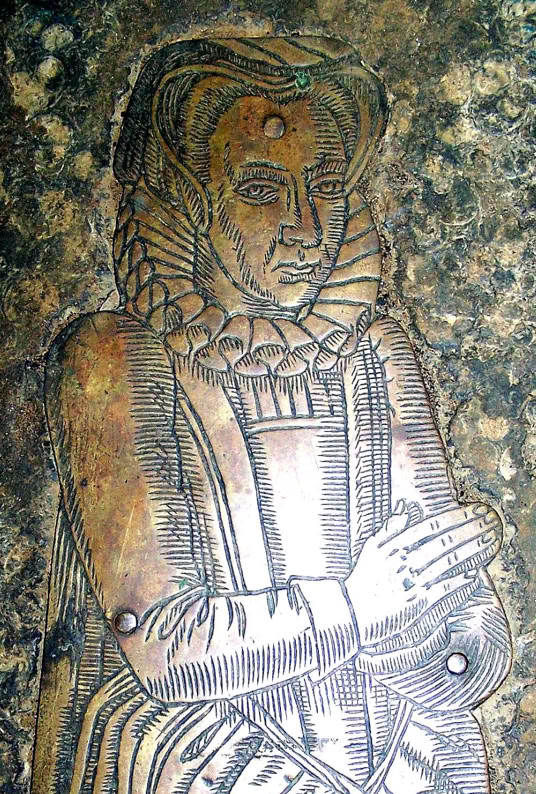
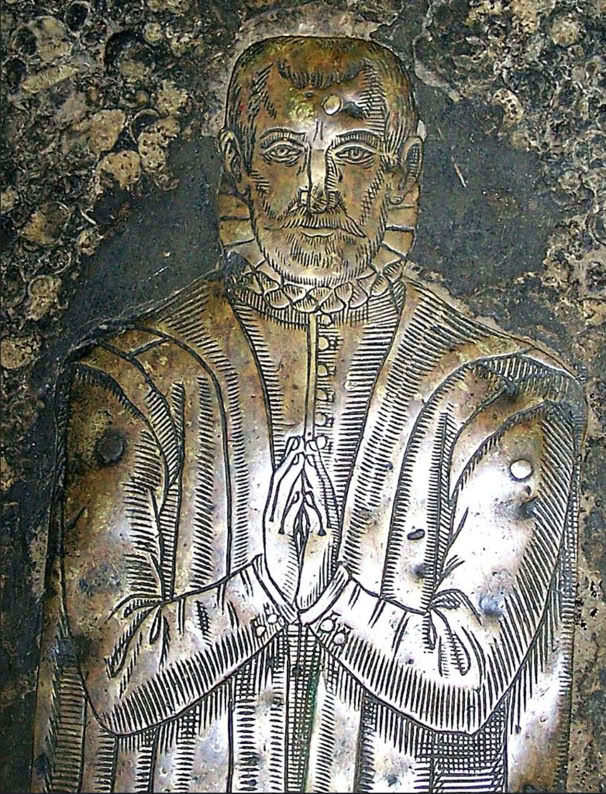
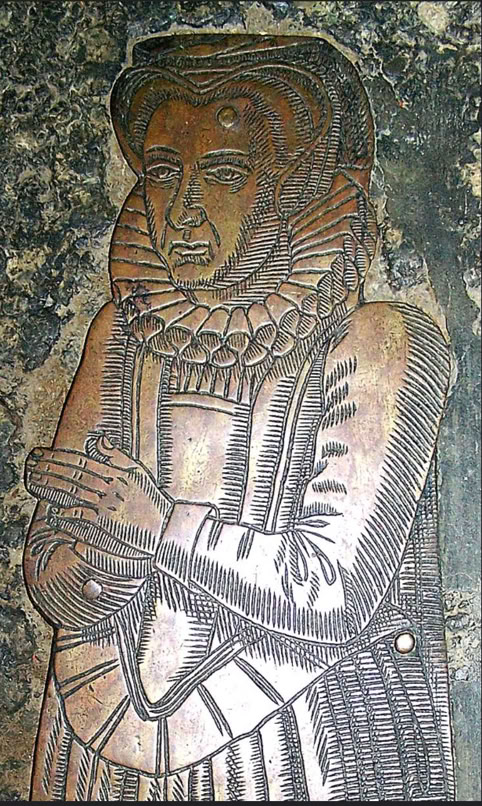
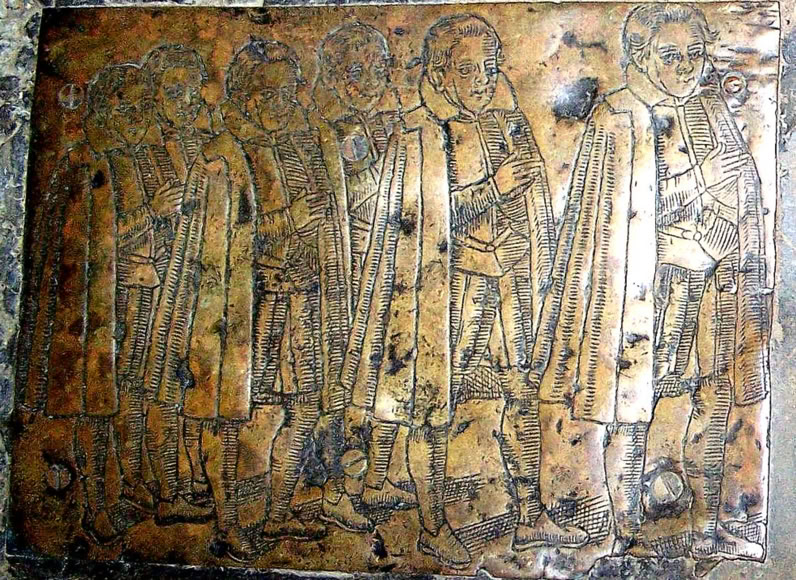
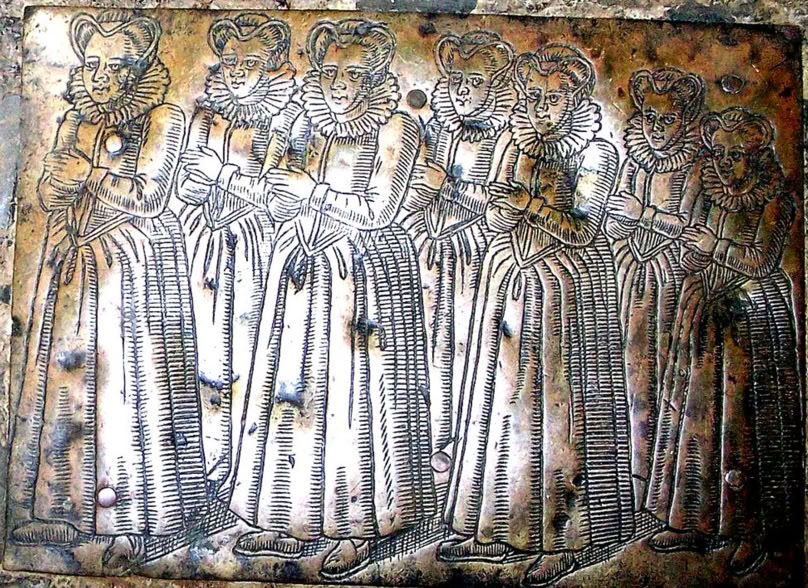
William is buried in the Much Hadham church, near the tomb of his parents. Like his parents’ tomb, his features brasses of William, his two wives, and their six sons and seven daughters.
flikr: jmc4